

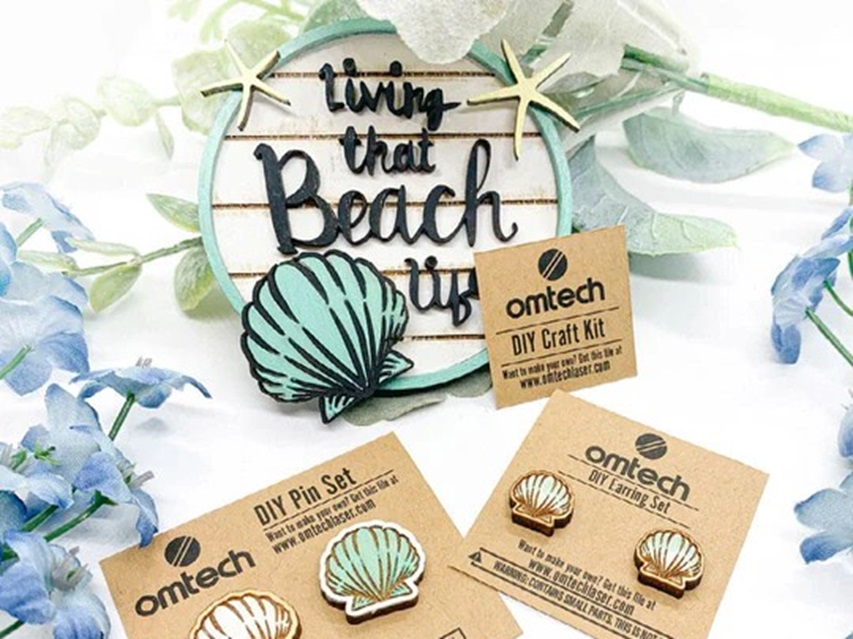
Custom packaging has become an increasingly important part of how bakeries, cake shops and patisseries present their products.
A cake box is no longer simply something used to transport a product safely. For many businesses, packaging is part of the customer experience. The right presentation can make a birthday cake feel more premium, turn a box of biscuits into a thoughtful gift, and help an independent bakery create a more professional and memorable brand.
This is one reason why laser cutting and engraving can be useful for bakeries looking to produce custom packaging in small batches.
With a CO₂ laser, businesses can create packaging sleeves, personalised tags, cake toppers, box inserts, engraved wooden gift boxes, decorative elements and packaging prototypes without relying entirely on large-volume printing or die-cutting orders.
For bakeries producing wedding orders, seasonal collections, corporate gifts or personalised products, this flexibility can be particularly valuable.
So, how can laser technology fit into a modern bakery packaging workflow?
Why Custom Packaging Matters for Bakeries
Bakery products are highly visual.
Customers are not simply buying:
- cakes;
- biscuits;
- macarons;
- cupcakes;
- pastries;
- chocolates;
- gift boxes.
They are also buying the presentation and experience surrounding those products.
Packaging can help communicate:
- premium quality;
- handmade craftsmanship;
- brand identity;
- personalisation;
- seasonal themes;
- gift value.
This becomes particularly important for occasions such as:
- weddings;
- birthdays;
- Christmas;
- Easter;
- Mother’s Day;
- baby showers;
- corporate events.
For independent UK bakeries, packaging can therefore become another way to differentiate products without changing the recipe itself.
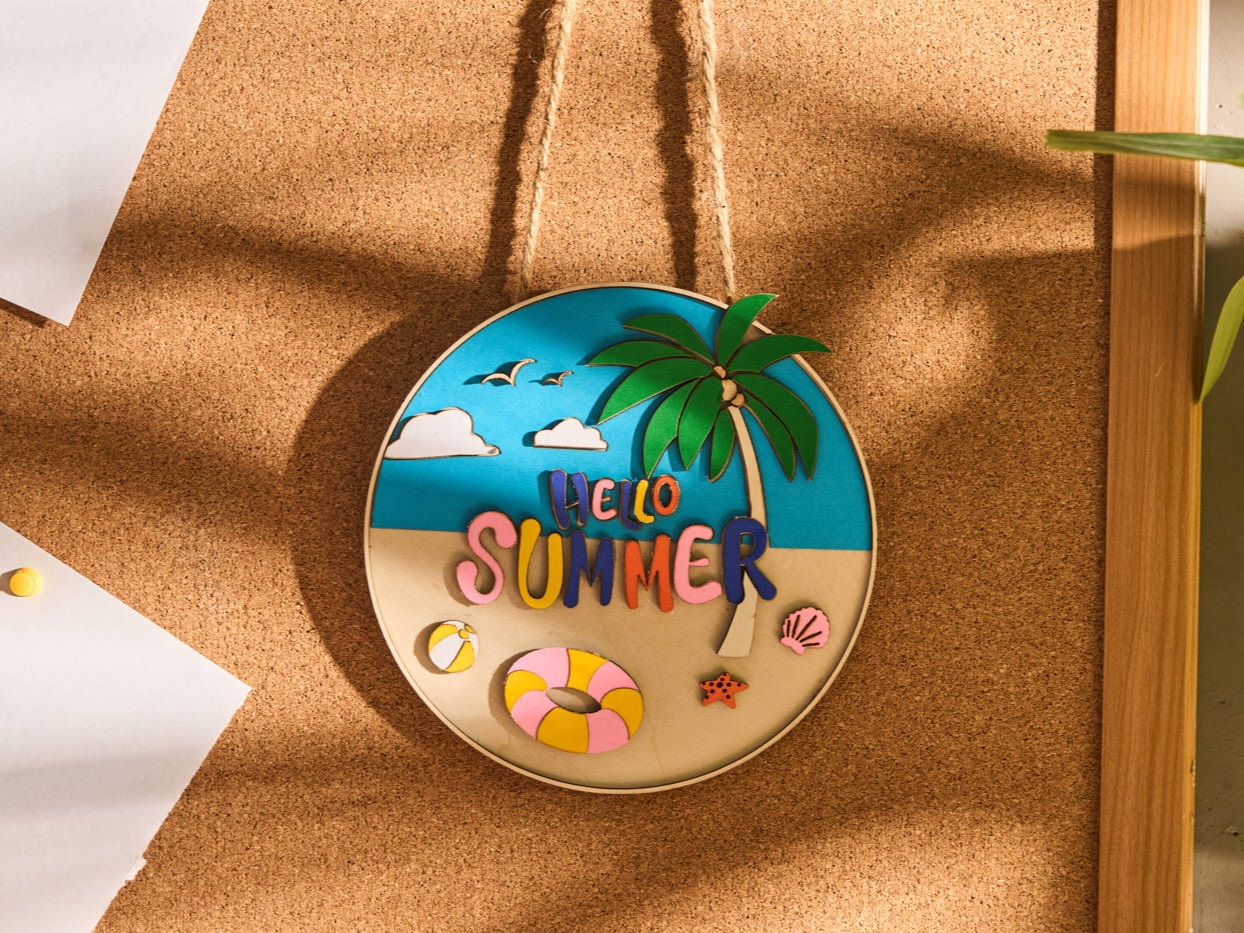
1. Laser-Cut Packaging Sleeves
One of the simplest applications is a decorative packaging sleeve.
Rather than ordering a completely different printed box for every event or seasonal collection, a bakery can use a standard box and add a custom laser-cut sleeve.
The sleeve might feature:
- the bakery logo;
- a customer’s name;
- wedding initials;
- seasonal graphics;
- event branding;
- decorative patterns.
For example, a standard white biscuit box could become part of a Valentine’s Day collection simply by adding a laser-cut paper sleeve featuring hearts and the bakery’s branding.
The basic packaging remains unchanged.
Only the decorative component needs to be redesigned.
For bakeries producing relatively small quantities, this can provide considerably more flexibility than holding multiple types of pre-printed packaging in stock.
2. Engraved Wooden Gift Boxes
For premium products, bakeries can also explore reusable wooden packaging.
A laser can engrave suitable wooden boxes with:
- bakery logos;
- customer names;
- personal messages;
- dates;
- corporate branding;
- event graphics.
Wooden gift boxes can work particularly well for:
- luxury biscuits;
- chocolates;
- premium macarons;
- Christmas collections;
- corporate gifts;
- special-edition products.
One advantage is that the packaging itself can become part of the gift.
Instead of being immediately discarded, a personalised wooden box may be kept and reused by the customer.
For premium bakery products, that can increase the perceived value of the overall order.
3. Personalised Cake Toppers
Cake toppers are not technically packaging, but they are often delivered with the packaged cake and contribute significantly to the final presentation.
CO₂ lasers can cut suitable materials such as certain acrylics, wood and card to create personalised toppers.
Popular designs include:
- names;
- ages;
- wedding initials;
- “Happy Birthday”;
- “Congratulations”;
- company logos;
- seasonal messages.
For a cake business producing a large number of personalised orders, making toppers in-house can simplify the customisation process.
Instead of outsourcing every unique name, age or message, the business can produce the required topper alongside the order.
This can be especially useful for UK cake businesses specialising in birthdays, weddings and celebration cakes.
4. Laser-Cut Box Inserts
Packaging is not only about appearance.
It also needs to protect delicate products during collection and delivery.
Custom laser-cut inserts can help keep products separated and positioned inside the box.
They can be designed for:
- cupcakes;
- macarons;
- biscuits;
- chocolates;
- mini cakes;
- small pastries;
- mixed gift sets.
A well-designed insert can help reduce products:
- sliding around;
- colliding;
- tipping over;
- moving during transport.
The advantage of laser cutting is that an insert can be designed around the exact dimensions of the bakery product.
This can be particularly useful when standard inserts do not fit unusually sized products.
5. Personalised Packaging Tags
Tags are one of the easiest ways to customise standard bakery packaging.
Instead of redesigning the entire box, a bakery can add a small laser-cut or engraved tag.
A tag might include:
- a customer’s name;
- “Thank You”;
- a wedding date;
- an event name;
- bakery branding;
- a short personalised message.
Depending on the application, suitable materials could include:
- paper;
- card;
- wood;
- acrylic.
This approach can be especially useful for weddings.
For example, 80 favour boxes could use the same standard packaging while every box receives a tag engraved with an individual guest name.
6. Wedding and Event Packaging
Weddings are one of the clearest opportunities for personalised bakery packaging.
A bakery or cake business may be supplying:
- wedding cakes;
- biscuit favours;
- macarons;
- dessert boxes;
- mini cakes;
- edible wedding favours.
Laser-cut packaging elements can add:
- the couple’s initials;
- wedding dates;
- guest names;
- table numbers;
- monograms;
- decorative patterns.
For example, a bakery could use a standard kraft box for wedding biscuits and add a custom paper wrap featuring the couple’s initials.
This produces a highly personalised appearance without requiring an entirely new printed box for each wedding.
7. Corporate Gift Packaging
Corporate gifting can be another valuable market for bakeries.
Businesses may order:
- Christmas biscuit boxes;
- branded cupcakes;
- client gifts;
- employee appreciation gifts;
- event desserts;
- branded confectionery.
Laser engraving allows bakeries to add client branding to suitable packaging components such as:
- wooden box lids;
- packaging tags;
- acrylic decorative elements;
- presentation boards.
For the bakery, this creates an opportunity to sell more than the food itself.
The business is providing a complete branded gifting experience.
8. Seasonal Packaging Without Excess Stock
Seasonal packaging presents a common challenge for small bakeries.
Different designs may be required throughout the year for occasions such as:
- Valentine’s Day;
- Easter;
- Mother’s Day;
- Halloween;
- Christmas;
- New Year.
Ordering large quantities of custom-printed packaging for every occasion can result in unused stock.
Laser-cut add-ons offer another approach.
A bakery can maintain a core range of standard boxes and change only the:
- sleeve;
- tag;
- topper;
- decorative insert;
- engraved element.
After Valentine’s Day, for example, the underlying box can still be used for Mother’s Day or Christmas.
Only the custom decorative component changes.
This makes short seasonal runs easier to manage.
9. Turning Standard Boxes Into Premium Packaging
Custom laser packaging does not mean the bakery needs to manufacture every box itself.
In many cases, the more efficient model is:
standard packaging + custom laser component
For example, a bakery could purchase standard kraft cake boxes and add:
- laser-cut logo tags;
- personalised sleeves;
- decorative window frames;
- engraved wooden labels.
This hybrid approach can produce a more customised appearance while allowing the bakery to continue using readily available packaging.
For independent businesses, this can be much more practical than producing every element from scratch.
10. Prototyping Packaging Before Ordering in Bulk
A CO₂ laser can also be useful during packaging development.
Suppose a bakery wants to introduce a new 12-piece macaron gift box.
Before ordering thousands of finished boxes, several prototypes can be produced to test:
- box dimensions;
- insert spacing;
- product fit;
- lid construction;
- window dimensions;
- logo placement;
- opening experience.
The bakery can put real macarons into the prototype and see whether the design actually works.
Problems can then be corrected before committing to a larger packaging order.
For small businesses, this can reduce the risk of expensive packaging mistakes.
Which Materials Can Be Used for Laser-Cut Bakery Packaging?
The right material depends on the specific application and laser system.
Common options can include:
Paper and Card
Useful for:
- packaging sleeves;
- tags;
- decorative inserts;
- box prototypes.
Wood
Useful for:
- premium gift boxes;
- engraved tags;
- reusable packaging elements.
Acrylic
Useful for:
- cake toppers;
- premium tags;
- decorative elements;
- branding pieces.
Other Laser-Compatible Sheet Materials
Certain packaging and model-making boards may also be suitable depending on their composition.
However, the exact material should always be verified before it is placed inside a laser.
Do not process unknown plastics, coatings or composite materials simply because they look similar to known laser-compatible materials.
Food Contact and Packaging Contact Are Different
This distinction is important for bakeries.
Not every packaging component directly touches the food.
For example:
- a wooden gift box may contain individually wrapped biscuits;
- an acrylic logo may be attached to the outside of a box;
- a paper sleeve may wrap around secondary packaging.
These are very different applications from placing an unwrapped pastry directly onto a laser-cut material.
If a laser-cut component will come into direct contact with food, the material needs to be assessed for that intended use.
Laser compatibility does not automatically mean suitability for food contact.
The bakery should verify both separately.
Laser Cutting Can Help With Minimum Order Quantities
Traditional custom packaging often involves minimum order quantities.
A packaging supplier may require orders of:
- 500 boxes;
- 1,000 sleeves;
- several thousand printed units.
That may be perfectly reasonable for a large bakery chain.
For an independent bakery producing 40 wedding favours or 100 Christmas boxes, however, it can create unnecessary stock.
Laser cutting makes short-run customisation possible.
A bakery might produce:
- 20 personalised wedding boxes;
- 50 corporate gift tags;
- 10 custom cake toppers;
- 100 Christmas sleeves.
This is where laser production is particularly useful:
low-volume production + high customisation.
Every Package Can Be Different
Another advantage of digital laser production is variable personalisation.
Imagine a bakery receives an order for 100 dessert boxes for a wedding.
Instead of making 100 identical tags, each one could include:
- the guest’s name;
- table number;
- personalised message.
The overall design remains the same.
Only the variable information changes.
The same approach could be used for corporate gifting.
A business might order 50 boxes with the company logo while each box is personalised with the recipient’s name.
This level of personalisation can increase perceived value without requiring an entirely different manufacturing process for each item.
Bakery Packaging Designed for Social Media
Packaging increasingly plays a marketing role.
Customers regularly photograph and share:
- celebration cakes;
- biscuits;
- dessert boxes;
- personalised gifts;
- unboxing experiences.
Laser-cut details that can work particularly well visually include:
- layered paper designs;
- engraved wooden logos;
- personalised names;
- acrylic toppers;
- geometric cut-outs.
For bakery businesses marketing themselves through Instagram, TikTok and Pinterest, distinctive packaging can therefore contribute to customer-generated content.
The package becomes part of what customers want to photograph.
Building Consistent Bakery Branding
Strong branding is about consistency.
A bakery may already use a specific:
- logo;
- typeface;
- colour palette;
- illustration style.
Those same elements can be carried across different laser-cut components, including:
- box tags;
- cake toppers;
- wooden gift boxes;
- display pieces;
- packaging sleeves.
The customer then experiences the same visual identity across multiple touchpoints:
website → bakery → product → packaging
For an independent bakery, this consistency can help create a more established and recognisable brand.
When Does Laser Packaging Make the Most Sense?
Laser production is particularly useful when packaging needs to be:
- personalised;
- produced in small batches;
- changed frequently;
- prototyped quickly;
- customised for individual events;
- produced with variable names or designs.
It is less suited to extremely large production runs of identical packaging.
If a national bakery requires 100,000 identical printed cake boxes, commercial printing and die cutting will generally make more sense.
The laser is strongest where flexibility matters.
A Typical Laser Packaging Workflow for a Bakery
A small UK bakery could follow a workflow like this:
Step 1: Choose the Standard Packaging
Start with an existing:
- cake box;
- biscuit box;
- gift carton;
- kraft box.
Step 2: Choose the Custom Element
For example:
- sleeve;
- tag;
- cake topper;
- insert;
- engraved lid.
Step 3: Create the Design
Prepare the artwork in compatible design software.
Step 4: Test the Material
Check:
- cutting quality;
- engraving contrast;
- folding;
- fit;
- smoke staining.
Step 5: Produce a Prototype
Assemble one complete package before starting the full order.
Step 6: Batch Production
Once the design, material and fit have been confirmed, produce the required quantity.
Remember Kerf When Designing Packaging
Precision matters when producing fitted packaging components.
A laser removes a small amount of material along the cutting path. This is known as kerf.
Kerf can affect the fit of:
- slots;
- tabs;
- box joints;
- inserts;
- tab-and-slot packaging.
Before producing an entire batch, test the actual:
- material thickness;
- slot width;
- tab dimensions;
- fold positions;
- assembled fit.
Even a small dimensional difference can affect whether a packaging insert fits properly.
Producing a prototype first is usually much cheaper than discovering the problem after cutting 200 pieces.
Keep Packaging Easy to Assemble
An elaborate packaging design may look impressive on Instagram but still be impractical in a busy bakery.
If one package takes five minutes to assemble, producing 100 of them requires more than eight hours of assembly time.
When developing custom packaging, consider:
- How quickly can staff assemble it?
- Does it require glue?
- Are there too many individual components?
- Can it be stored flat?
- Is it easy to personalise?
- Will it survive customer collection or delivery?
A successful packaging design should balance visual impact with production efficiency.
Safety and Extraction Matter
Laser cutting paper, card, wood and other compatible materials produces smoke and particulates.
Appropriate extraction and ventilation are therefore important.
Lasers should also be monitored during operation, particularly when cutting thin paper and card materials that may ignite more readily than thicker materials.
Before processing any new packaging material:
- Identify exactly what it is made from.
- Confirm that it is suitable for laser processing.
- Test appropriate settings.
- Use suitable extraction.
- Monitor the cutting process.
Unknown plastics, coatings and composite materials should not simply be placed into a laser for testing.
How OMTech CO₂ Lasers Can Support Custom Bakery Packaging
OMTech CO₂ laser cutting and engraving systems can support a range of packaging and personalisation projects for bakeries, cake businesses and other small food businesses.
Applications can include:
- laser-cut packaging sleeves;
- engraved wooden gift boxes;
- personalised cake toppers;
- custom packaging tags;
- box inserts;
- wedding and event decorations;
- packaging prototypes;
- seasonal packaging components.
For businesses processing frequent custom orders, digital production also makes it easier to change:
- names;
- dates;
- logos;
- event themes;
- product dimensions.
Unlike traditional die cutting, there is no need to manufacture a completely new physical cutting die every time the digital design changes.
That flexibility is one of the main reasons CO₂ laser cutting can be particularly useful for short-run custom packaging.
Turn Packaging Into Part of the Product
For bakeries, packaging has two jobs.
It needs to help protect the product, but it can also communicate:
- quality;
- personality;
- brand identity;
- occasion;
- value.
Laser cutting gives independent bakeries another way to produce customised packaging elements without necessarily committing to thousands of pre-printed boxes.
From wedding favour packaging and engraved gift boxes to personalised cake toppers, corporate tags and Christmas sleeves, the biggest advantage is flexibility.